Updated November 2026. Every limit and law quote below comes from the law itself.
You lifted the truck, bolted on a steel bumper, and now every cop in your mirror looks like he's carrying a tape measure.
In Delaware, that's barely a joke. Its law says: "Measurements made with an over-the-counter measuring device shall be prima facie evidence of a violation." In plain words, a hardware-store tape is enough to write you up, and a first offense costs $50 to $115.
Good news: you own a tape too. Not every state sets a fixed bumper height. Of the 20 states whose law we read, 16 do. Over the number, a truck can get a ticket or fail inspection. Where there's a number, the tape almost always runs from the ground to the bottom edge of the bumper, so you can check your own truck in 2 minutes. And if your lift pushed you over, some states write the fix into the law, like the lower bar Minnesota allows. Others ban it.
- Read the sticker in the driver's door jamb. Its weight rating picks your row. In Florida, weigh the empty truck instead. Indiana, Minnesota, Pennsylvania: which number
- Run the tape from the ground to the bottom edge of the bumper. Level ground, bed empty. Lifted? Do the frame rail too. Where exactly
- Find your state. Lift or body lift? Some rows cap it. Over the number? Your state decides if a lower bar fixes it. The table and the fixes
The Law Isn't After Your Steel Bumper
None of the laws we read bans a steel bumper. Michigan says so outright: its law "does not prohibit the installation of heavy duty equipment including bumpers". What the laws check is height, mostly at the bottom edge of the bumper.

A customer's F150. The law cares where its bumper's bottom edge sits, not that the bumper is steel.
Where the Tape Goes, and Which Row Is Yours
Park on level ground with the bed empty and the tires at the pressure on the tire sticker in the driver's door jamb. Hold the tape straight up from the ground to the bottom edge of the bumper. Do the front, then the rear.

Where the tape goes, on a customer's Ford Super Duty with an ADD steel front bumper.
If the bottom edge isn't flat, read it where it sits highest, like in the photo. 8 of the 16 laws spell out "highest point", and it's the safe reading everywhere else.
Lifted? Measure the frame rail too, the steel beam your bumper bolts to. Run the tape to its bottom edge at the very front, or the very back for the rear bumper. California and Michigan read the frame midway between the front and rear wheels instead. Your row says when the frame counts.
Which row is yours? In most states, it's the weight rating on the sticker in the driver's door jamb, not the 1500 or 2500 badge. That's the GVWR: the most your truck may weigh fully loaded. Indiana and Pennsylvania go by the weight it's registered at. Florida goes by the empty truck's weight on a scale, Minnesota by the ton rating.
The Numbers, Straight From 20 State Laws
| State | Max bottom edge, inches (front / rear) |
|---|---|
| California | Frame, not bumper, midway between the axles: Up to 4,500 lb: 27. 4,501-7,500 lb: 30. 7,501-10,000 lb: 31. Body lift cap: 5 inches, stock mounts included. |
| Delaware |
30. Exempt at 10,000 lb and up. Body lift cap: 3 inches, stock mounts included. |
| Florida | By net weight, the empty truck on a scale: Under 2,000 lb: 24 / 26. 2,000-3,000 lb: 27 / 29. 3,000-5,000 lb: 28 / 30. Exempt over 5,000 lb net. |
| Hawaii | Up to 4,500 lb: 29. 4,501-7,500 lb: 33. 7,501-10,000 lb: 35. Body lift cap: 3 inches, stock mounts included. |
| Idaho | Up to 4,500 lb: 24 / 26. 4,501-7,500 lb: 27 / 29. 7,501-10,000 lb: 28 / 30. 4x4 or dually, up to 10,000 lb: 30 / 31. |
| Illinois | Up to 4,500 lb: 24 / 26. 4,501-7,500 lb: 27 / 29. Over 7,500 lb: 28 / 30. Bumper changed to meet the limit? Then it's read at the frame rail. |
| Indiana | Registered at 11,000 lb or less: 30. |
| Maine | Frame end, not bumper: Up to 4,500 lb: 24 / 26. 4,501-7,500 lb: 28 / 30. 7,501-10,000 lb: 30 / 32. 10,001-11,500 lb: 31 / 33. 11,501-13,000 lb: 32 / 34. |
| Maryland | Up to 10,000 lb: 28. 10,001-18,000 lb: 30. Lifted? Same cap for the frame rails. |
| Michigan | Up to 4,500 lb: 26. 4,501-7,500 lb: 28. 7,501-10,000 lb: 30. Frame too, midway between the axles: 24, or 26 over 7,500 lb. Exempt at 10,001 lb and up. Body lift cap: 3 inches. |
| Minnesota |
25, any pickup rated 3/4 ton or less. Lift cap: truck and bumpers no more than 6 inches above stock. |
| Missouri | Up to 4,500 lb: 24 / 26. 4,501-7,500 lb: 27 / 29. 7,501-9,000 lb: 28 / 30. 9,001-11,500 lb: 29 / 31. |
| North Dakota | 27, any weight. |
| Ohio | Up to 4,500 lb: 24 / 26. 4,501-7,500 lb: 27 / 29. 7,501-10,000 lb: 28 / 31. Bumper moved on the frame, or a bar added? Then it's read at the frame rail. Body lift cap: 4 inches, stock mounts included. |
| Pennsylvania |
30, trucks registered at 11,000 lb or less. Some part of the bar must sit 16 to 30 inches off the ground. |
| Texas | We found no bumper height section in its equipment law. |
| Virginia | Up to 4,500 lb: 28. 4,501-7,500 lb: 29 / 30. 7,501-15,000 lb: 30 / 31. Never under 14. Bumper lowered? Then it's read at the frame rail. Front 4 inches or more above the rear: not allowed. Body lift cap: 3 inches. |
| Washington | Up to 4,500 lb: 24 / 26. 4,501-7,500 lb: 27 / 29. 7,501 lb and up: 28 / 30. Body lift cap: 3-inch spacer, body no more than 4 inches above the frame. |
| West Virginia | Up to 10,000 lb: 31, never under 6. Bumper height changed, a lift included? Then it's read at the frame rail. Body lift cap: 3 inches. |
| Wisconsin | No fixed bumper number. Lift cap: 9 inches above factory ride height, lift and bigger tires combined, on 4x4s and on trucks up to 8,000 lb gross weight. |
Not in the table? For the other 30 states, we could not confirm a number in the law, so check your state's vehicle code.
Door sticker over 10,000 lb? If your row stops below your weight, the law behind it sets no height limit for your truck.

A customer's lifted Silverado HD with a Steelcraft steel rear bumper. Measure the rear too.
Over the Number? Your State Decides the Fix
First, make sure the number is yours. In 2014, a Pennsylvania owner took his lifted Ranger on 35-inch tires to inspection. He was told its rear bumper had to sit between 13 and 20 inches. It sat at 30. A second shop went by 16 to 30 inches, the light-truck range in Pennsylvania's code today. He posted: "I now have new stickers."
Minnesota, North Dakota, Missouri.
Allowed by law, each with rules for the bar.
Maryland, Washington.
Banned outright.
Virginia, West Virginia, Illinois, Ohio, California, Maine.
No help: the tape goes to the frame.
Delaware, Hawaii.
The law won't let the bumper sit below the frame rail.
Florida, Idaho, Indiana, Michigan, Pennsylvania.
The law we read doesn't say, so don't count on one.
Minnesota lets you add a full-width bar to the bumper if the original bumper sits no higher than 30 inches. The law spells out the bar: at least 4.5 inches tall, 10 inches past the frame on each side, 4 braced mounts. North Dakota allows "A horizontal drop bumper" at least 3 inches tall and as wide as the body. Missouri allows a drop bumper mounted no more than 3 inches below the factory mounts.
Where a bar won't help, the fix is a smaller lift or smaller tires. Swap 35-inch tires for 33s and the truck sits about 1 inch lower, half the change in tire size.
And in Virginia, a ticket doesn't have to stick. The law says "the court may, in its discretion, dismiss the summons" when you bring proof of the fix by your court date.
Short Answer
How high can I lift my truck and stay legal?
There's no single number. Most of these laws cap where the bumper or the frame sits, not the lift. 10 also cap the lift or a body lift, at 3 to 9 inches. Your row in the table shows yours.
Built for your truck
Measure today. Bolt on the steel. Measure again.
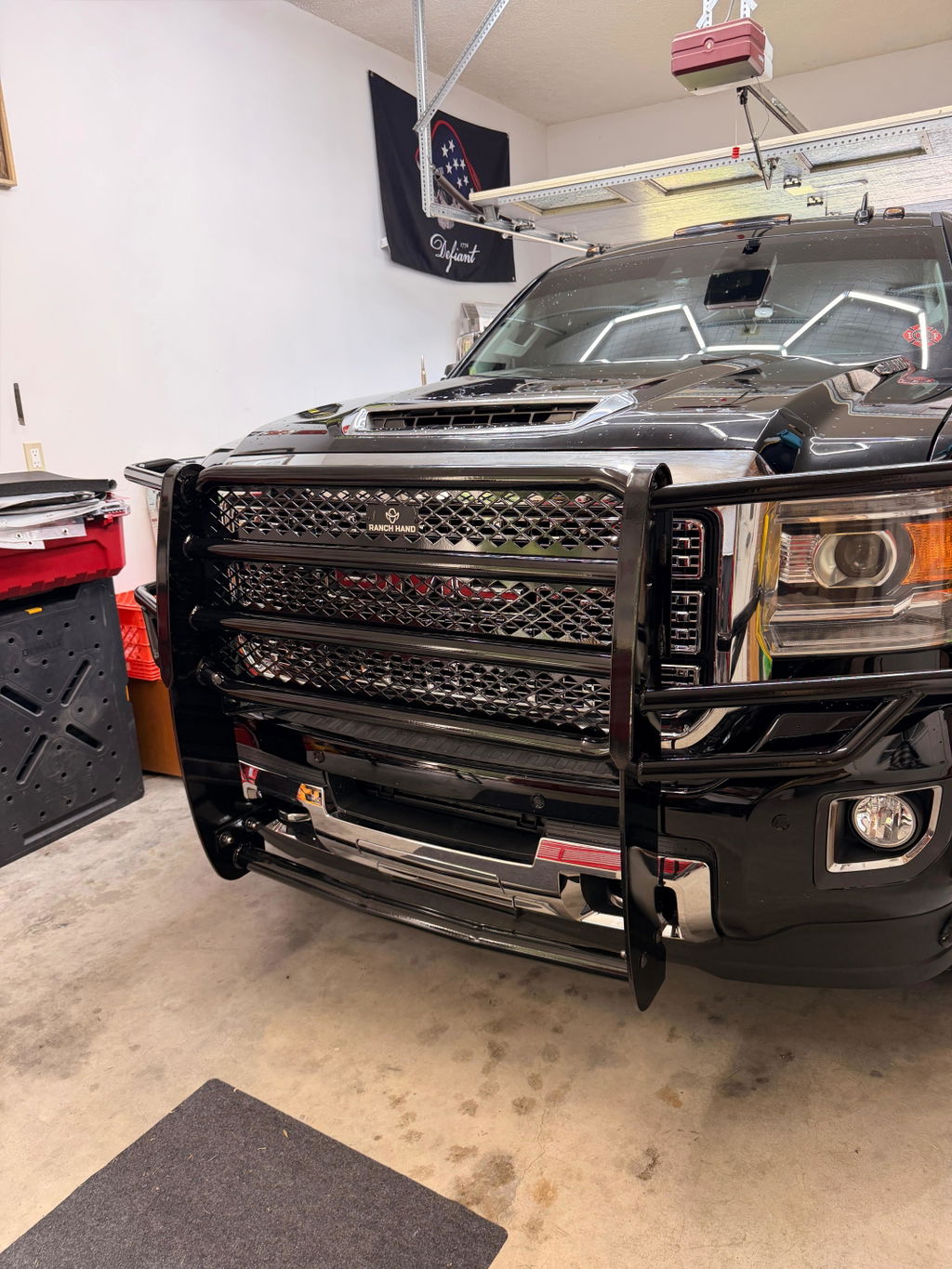
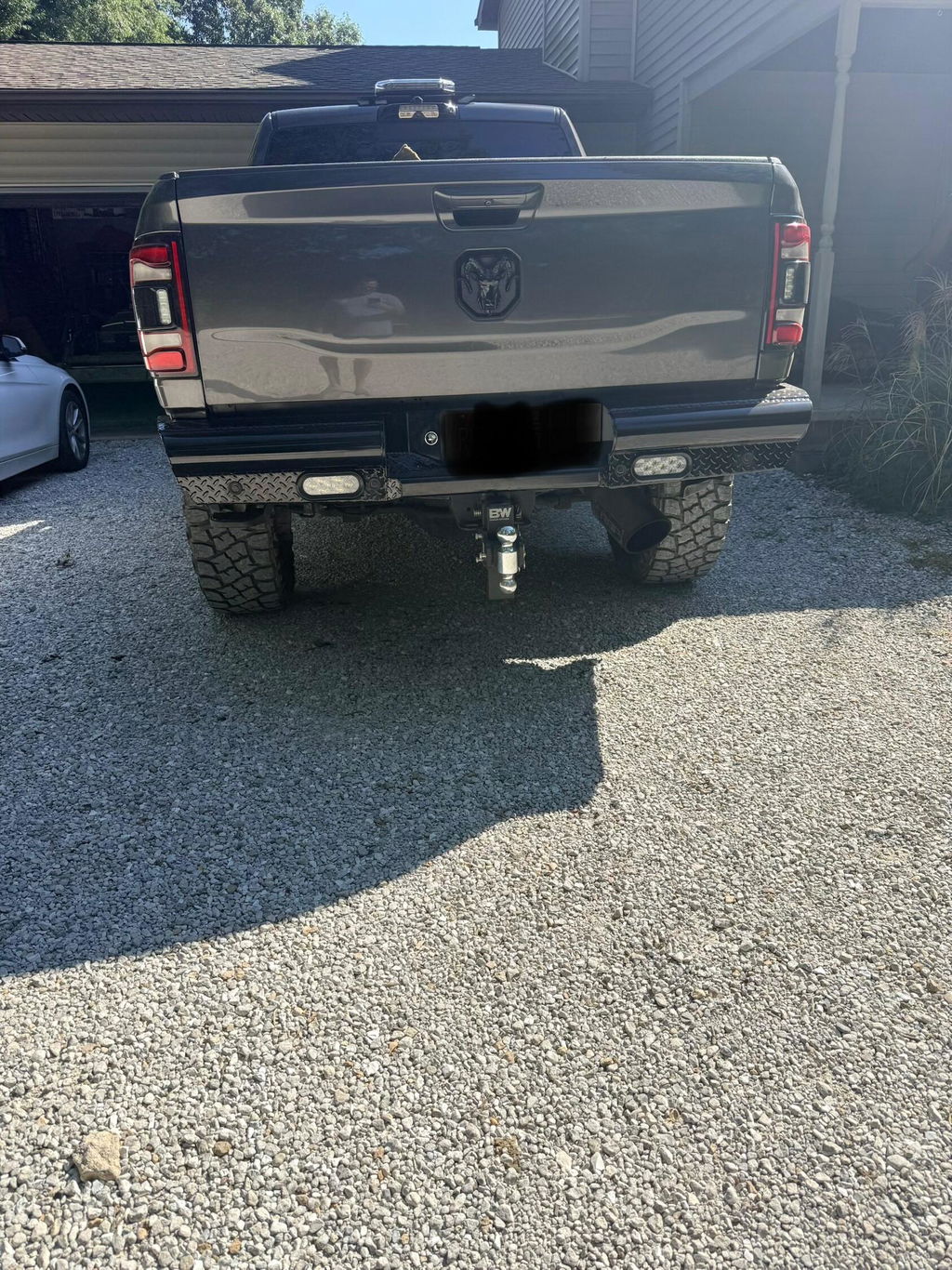
Close to your number today? Pick your fix above before you order. Ranch Hand, Fab Fours, Steelcraft, Westin, Warn, ADD: pick your truck and see the steel bumpers we carry for it.
F150 F250 / F350 Silverado 1500 Silverado 2500 / 3500 Sierra 1500 Sierra 2500 / 3500 Ram 1500 Ram 2500 / 3500 Tacoma Tundra
Not sure what fits? Send us your year, model and trim before you order. We check the maker's fitment notes and tell you what bolts on. We answer fitment questions every business day.