Updated July 2026. Winch ratings and prices pulled from the supplier listings we stock.
A winch is only as strong as the steel it bolts to. That is why winch-ready bumpers exist, and why the bumper decision comes before the winch decision. Winch-ready front bumpers are daily business for us, and the capacity question arrives with them again and again. This guide settles both: what winch-ready means, and how to size and mount the winch that goes in it.
The Short Answer
A winch-ready bumper carries a reinforced steel mount rated for a stated winch size, plus a fairlead opening that feeds the line. Pick the bumper for your truck, run the winch math before committing: at least 1.5 times your GVWR, never above the bumper rating. Match the fairlead to your rope: hawse for synthetic, roller for steel cable.
One thing the fairlead takes with it is the front plate spot. Here is what happens to the plate once a winch is in the bumper, and what the bracket costs.
GVWR is the loaded-truck maximum on your door-jamb certification label, and a hawse is the smooth aluminum lip a synthetic rope feeds through. Two ratings have to agree before you order: the winch must be strong enough for your truck, and the bumper must be rated for that winch.
Winch-Ready Buying Checks at a Glance
| What to check | The rule | Where to verify |
|---|---|---|
| Winch capacity | At least 1.5x your GVWR | Door-jamb sticker + Warn's sizing guide |
| Bumper's winch rating | Equal to or above your winch size | Product listing (replacement bumpers we stock rate for 10,000 to 18,000 lb winches) |
| Mount style | Integrated plate, exposed tray, or grille-guard tray | Listing specs |
| Fairlead type | Hawse for synthetic rope, roller for steel cable | Your winch's line type |
| Bolt pattern | 10" x 4.5" four-bolt standard on most truck winches | Winch spec sheet |
| Winch height and control box | Must clear the opening; some boxes relocate | Listing fitment notes |
| Sensors and cameras | Park sensors usually keep cutouts; adaptive cruise (ACC) may need relocation | Listing fitment notes |
| Weight and install | Steel front bumpers run roughly 150 to 400 lb, plan a two-person install | Listing specs |
Every rating and price here comes off the supplier listings we stock from, so confirm your year and trim against the product page before ordering.
Skip ahead. Jump to what matters most:
What Makes a Bumper Winch-Ready?
Winch-ready starts at the mount: a load-rated steel plate or tray welded into the bumper structure, not just a hole cut in the face. The whole assembly transfers a pull straight into the truck frame, and the fairlead opening sits centered on that mount, so the line feeds without sawing against sheet metal.
The steel behind the opening backs up the claim. Hammerhead builds its winch front bumpers from 3/16 inch plate, per its listings, and welds the shackle mounts through the bumper, inside and out, so recovery loads ride on the frame connection. Westin's Pro-Series front bumper carries a 4-gauge winch mount in its center section. Steel gauge runs backward, the lower the number the thicker the plate, which puts 4-gauge near a quarter inch of solid steel.
You will also see a stated number on real winch-ready listings: "accepts up to a 16,500 lb winch" or "fits most winches up to 10k." Treat it as the bumper's operating limit; it matters as much as the winch's own rating. A bare "winch compatible" claim with no rating deserves a second look.
Can You Mount a Winch on a Stock Bumper?
For a real recovery pull, no. Factory bumpers are stamped sheet metal hung on energy-absorbing brackets designed to crush in a collision. That is the right behavior in a crash and the wrong one under a 10,000 lb line pull. The load path was never engineered for winching, and a hard pull can fold the face or tear the brackets loose.
Universal winch plates bolt to the frame behind or below the factory bumper. They work for occasional light duty, but they hang the winch low, expose it to weather, and leave clearance and airbag-sensor questions open on late-model trucks. If you searched "Ram 1500 winch with stock bumper," the answer is light duty only, with real trade-offs.
A winch-ready replacement bumper puts the winch behind steel, on a rated mount, with the fairlead centered where the line actually runs.
What Winch Capacity Does Your Truck Need?
The sizing rule is Warn's own, published in its winch selection guide: winch capacity at least 1.5 times your GVWR. GVWR is the gross vehicle weight rating, the fully loaded maximum printed on the certification label inside the driver's door, not the curb weight (the truck sitting empty).
Here is how the calculation lands by truck class, using the GVWRs the makers publish for 2026 models. Pull your exact figure off the door-jamb certification label before you buy.
| Truck class | GVWR range | 1.5x minimum (rounded up) | Winch size that fits |
|---|---|---|---|
| Midsize (Tacoma, Colorado, Ranger) | 5,600 to 6,850 lb | 8,400 to 10,300 lb | 10,000 lb; 12,000 lb for a Tacoma hybrid or Ranger Raptor |
| Half-ton (F150, Ram 1500, Silverado 1500, Tundra) | 6,200 to 7,800 lb | 9,300 to 11,700 lb | 12,000 lb; 10,000 lb only for the lightest regular cabs; F150 Lightning 14,000 lb |
| HD (F250/F350, Ram 2500/3500, Silverado HD) | 8,500 to 14,000 lb | 12,800 lb and up | 15,000 to 18,000 lb, capped by the bumper rating |
Worked example: a 2021 F250 diesel carries a GVWR right around 10,000 lb on the door label. Multiply by 1.5 and the floor is 15,000 lb, which points at the 15,000 and 16,500 lb winches and rules out every bumper rated 12,000 lb or below.

The formula sets your floor, and the bumper sets your ceiling. The second check is the easy one to miss, because bumper ratings swing wide even inside one catalog: Steelcraft's HD Elevation Bullnose takes winches up to 10,000 lb, while Steelcraft's HD Replacement line is rated for 18,000 lb, the highest capacity we stock. Rounding up between those rails is fine, and the added capacity pulls the same stuck truck with less strain.
The pairing rule: never buy a winch bigger than the bumper's stated capacity rating. Warn's regular Ascent bumpers accept Warn mid-frame winches up to 12,000 lb, so the 16,500 lb Warn 16.5ti we sell belongs on a bumper rated 16,500 lb or higher, such as Warn's Ascent HD, whose mount is rated to 18,000 lb. And if the bumper you want caps below your 1.5x number, that is the signal to move up to a higher-rated line, the 16,500 and 18,000 lb rows below, not to shrink the winch. One honest limit: above roughly 12,000 lb GVWR the 1.5x math outruns every truck winch we carry. Run the biggest winch the bumper rates for and add a snatch block, a pulley that roughly doubles effective pull, for the hard recoveries.
Winch Mounts: Tray, Plate, or Grille Guard?
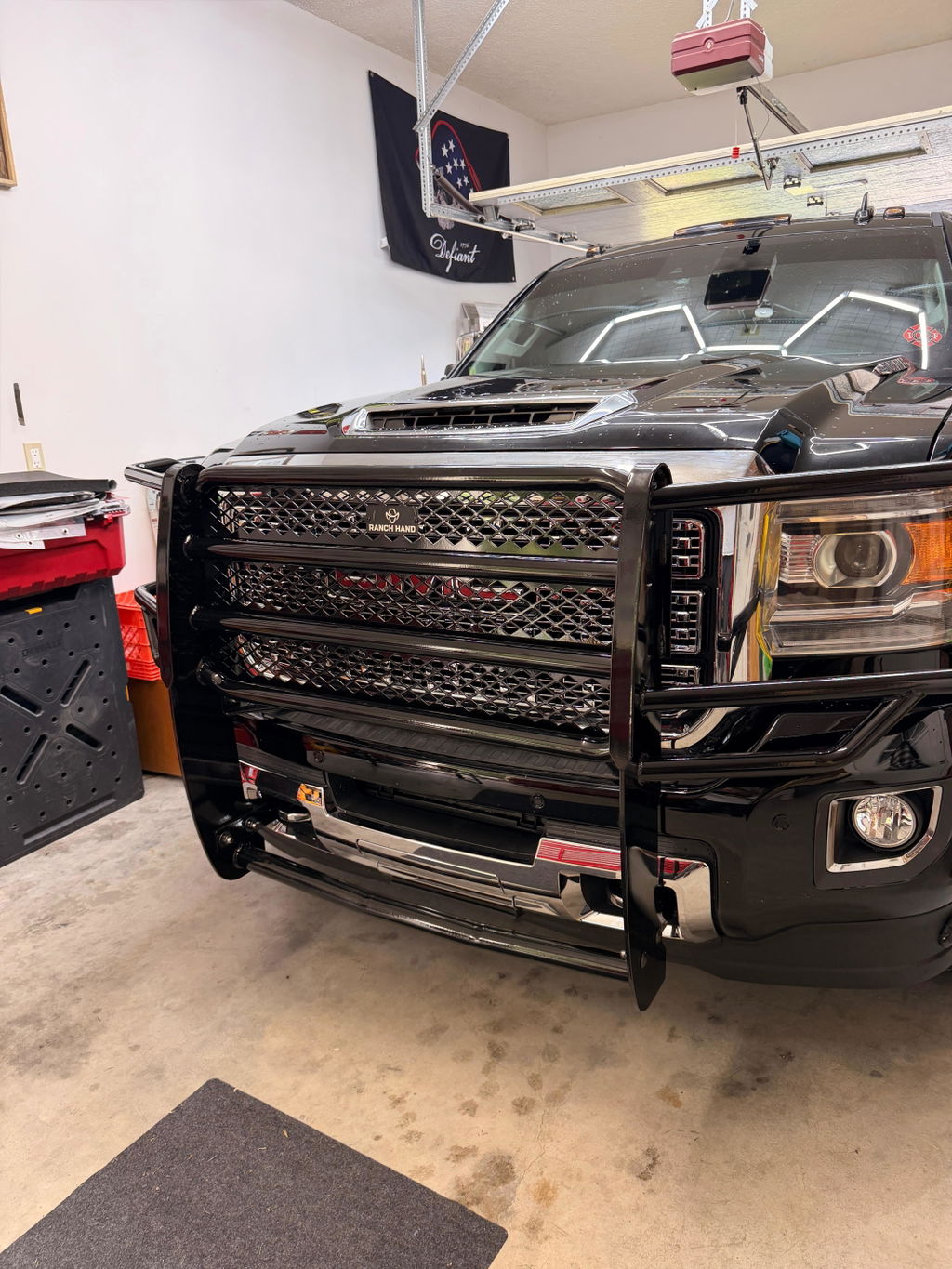
Three mount styles cover the winch-ready market, and the supplier listings tell you which one you are looking at. Most full-replacement front bumpers use an integrated plate: the mount is welded inside the bumper shell, the winch sits behind the face, and only the fairlead is visible. Ranch Hand's Sport, Fab Fours Premium and Matrix, Hammerhead's front bumpers, and ADD's lines all mount this way.
The second style is an exposed tray, sometimes called a cradle. Go Rhino's BR series builds the tray and brackets from quarter-inch steel and adds a hinged cover that works with or without a winch installed. Fab Fours Red Steel runs a quarter-inch plate tray as well. Trays keep the winch accessible and make installation and service easier, at the cost of a more open look.
The third style skips bumper replacement entirely. Westin's HDX winch-mount grille guard bolts its own tray directly to the frame ahead of the factory bumper, which stays on the truck. The tray is tested to a 16,500 lb straight-line pull and fits most 8,000 to 12,000 lb winches up to 10.25 inches tall, the listing's own numbers. Trade-offs come with it: factory tow hooks are lost, and trucks with adaptive cruise lose the sensor's line of sight.
Convenience details separate similar mounts: Warn pre-drills its Ascent front bumpers so a winch drops in after the bumper is installed. Running bumper-first and adding the winch next season, that detail decides it.

Hawse vs Roller Fairlead: Which One Do You Need?
Match the fairlead to your rope. A fairlead is the fitting the winch line runs through at the bumper face, there to protect the line from the opening's edges. Synthetic rope pairs with an aluminum hawse, a smooth machined lip the rope glides across. Steel cable needs a roller fairlead, four steel rollers that manage the abrasion and the side loads of an angled pull.
Do not mix the pairs: steel cable chews the soft lip of a hawse, and a roller fairlead that already served steel cable carries burrs that can slice synthetic rope on a loaded pull. Switching to synthetic means fresh rollers or, better, a hawse fairlead.

On the bumper side, the question is clearance: a hawse sits nearly flush, and some designs recess it fully, the way Westin's Pro-Series front bumper does; its spec sheet names a recessed hawse fairlead outright. A roller fairlead stands proud of the face and needs the deeper cutout, so check the product listing if you are set on rollers.
Running synthetic on a half-ton or midsize truck also trims weight off the nose compared to steel cable. Verdict: hawse plus synthetic, unless you already run steel cable and intend to keep it.
Will It Bolt Up? Patterns, Clearances, Sensors
Bolt pattern is the easy part, because most truck winches from 8,000 to 12,000 lb share the standard 10" x 4.5" four-bolt footprint and winch-ready bumpers drill for it. The 15,000 and 16,500 lb class can run larger feet, so confirm the pattern against the bumper's listing before ordering a big winch.
Run three checks before you order:
- Winch height. A tall winch can foul the opening or the crossmember (the frame brace behind the bumper), which is why Westin publishes a 10.25 inch limit for its HDX tray.
- Control box. The solenoid pack that switches the winch motor sometimes mounts high enough to block the fairlead opening, so plan on the relocation bracket winch manufacturers offer.
- Factory hardware. Hammerhead notes that OEM low-speed impact guards need trimming for some winch installs on its Low Profile front bumpers.
Ten minutes with the listing's fitment notes beats a Saturday of grinding.
Electronics deserve the same read: park-sensor cutouts are standard on current-generation winch-ready front bumpers, while camera and adaptive cruise hardware moves brand by brand. ADD sells a relocation bracket for adaptive cruise on F150 builds. Front cameras follow the same pattern: some front bumpers keep the factory view and some block it unless hardware moves, and the listing for your year says which. Sensor rules change by year and trim, which is exactly what the product page fitment notes exist to answer. Not sure whether your truck has adaptive cruise: it is the cruise control that automatically holds a gap to the car ahead, and its radar typically sits low in the grille or bumper, exactly where the new front bumper goes.
Plan install day around the weight:
- A steel winch front bumper runs roughly 150 to 400 lb depending on class, per the listings. Bring a second pair of hands and a floor jack.
- The winch adds its own weight and two battery leads: mid-frame 8,000 to 12,000 lb models run roughly 60 to 100 lb, and the 15,000 to 16,500 lb class runs well heavier, so pull the figure off the winch's spec sheet. Route the cables away from heat and steering parts, and leave slack at the frame.
- Budget 2 to 3 hours for the bumper swap and another hour for the winch and wiring on a first install, longer if the factory bolts fight back.
- These bumpers ship LTL freight, meaning a freight carrier delivers it on a pallet. Inspect the crate and note any damage on the delivery receipt before signing.
The combined nose weight stays on the truck long after install day, and HD front ends are sprung to carry it. On a half-ton, plan a leveling kit (front spacers that restore ride height) or heavier front springs into the budget if you want the factory stance to hold.
Winch-Ready Lines We Stock
Winch-ready coverage on our side runs deepest through Ranch Hand, Steelcraft, Fab Fours, Hammerhead, and Warn, with Westin, Go Rhino, and ADD covering specific builds. Ratings below are quoted from the supplier listings; prices are rounded and current as of July 2026.
| Brand | Winch-ready line | Stated winch rating (per listings) | Starts near |
|---|---|---|---|
| Ranch Hand | Sport | 15,000 to 16,500 lb depending on the truck | $2,370 |
| Steelcraft | HD Replacement / HD Elevation Bullnose | 18,000 lb / 10,000 lb | $1,320 |
| Fab Fours | Premium / Matrix / Red Steel | 16,500 lb / 12,000 lb / 12,000 lb | $1,370 |
| Hammerhead | Full line, three guard configs | Up to a 16.5k winch on grille-guard front bumpers | $1,930 |
| Warn | Ascent / Ascent HD | 12,000 lb / 18,000 lb | $1,480 |
| Westin | Pro-Series front / HDX winch grille guard | 12,000 lb / 8,000 to 12,000 lb winches | $1,360 |
| Go Rhino | BR6 / BR11 | 12,500 lb / 16,500 lb | $1,785 |
| ADD | Stealth Fighter / HoneyBadger / Bomber | Not published, confirm before pairing | $2,500 |
The winch itself is on the same shelf: we stock Warn winches from the 8,000 lb VR EVO through the 16,500 lb 16.5ti, plus the full winch collection across brands. Match the winch to the bumper row above before ordering. If you are choosing between Warn and Superwinch, our Warn or Superwinch comparison lines them up size for size, with shelf prices. Most pairings from these rows land between $2,000 and $5,000 for bumper plus winch; rope upgrades and installation ride on top.
By truck, start from your model's bumper hub and filter for winch-ready front bumpers: F150, F250/F350 Super Duty, Ram 1500, Ram 2500/3500, Silverado 1500, Silverado/Sierra HD, Tacoma, and Tundra.
Frequently Asked Questions
Can you mount a winch on a stock bumper?
Not for rated recovery work, because factory bumpers are stamped sheet metal on collision brackets built to crush; they were never engineered to hold a line pull. Universal frame-mount plates handle light duty but hang the winch low and unprotected. A winch-ready bumper carries the load on a rated mount tied to the frame.
What is a fairlead on a winch?
A fairlead is the guide the winch line passes through at the bumper opening, centering the line on the drum and protecting it from rubbing the bumper face during angled pulls. Aluminum hawse fairleads serve synthetic rope, and roller fairleads serve steel cable.
Hawse or roller fairlead: which one do I need?
Match the fairlead to the line on the winch: synthetic rope takes a hawse, steel cable takes rollers, and mixing them shortens the life of the line. If you are switching cable to synthetic, replace the rollers with a hawse at the same time.
What size winch does a half-ton truck need?
Use the 1.5 times GVWR rule. Gas and hybrid half-tons run 6,200 to 7,800 lb GVWR, which puts the minimum at 9,300 to 11,700 lb, so a 12,000 lb winch covers the class; a 10,000 lb fits only the lightest regular cabs. Check the door-jamb certification label for your exact GVWR and round up when in doubt.
Do winch bumpers work with parking sensors and cameras?
Most current winch-ready front bumpers keep cutouts for factory park sensors. Cameras and adaptive cruise vary by brand and year: some lines include relocation brackets, others block the hardware on certain builds. Read the fitment notes on the product listing for your exact year and trim before ordering.
How heavy is a winch-ready bumper, and can I install it myself?
Steel winch front bumpers run roughly 150 to 400 lb depending on truck class, per the supplier listings. Two people and a floor jack handle the installation in a driveway. The winch adds roughly 60 to 100 lb for mid-frame models, more for the 15,000 lb class, plus wiring to the battery. Hardware bolts to factory frame points.
What size shackles fit a winch bumper's D-ring mounts?
Three-quarter inch D-ring shackles are the working standard on truck recovery points, and lines like ADD's Bomber state that size outright. Several current designs also accept soft shackles. Confirm the mount spec on your bumper's listing before you buy recovery gear.
Why not mount a winch on the rear bumper?
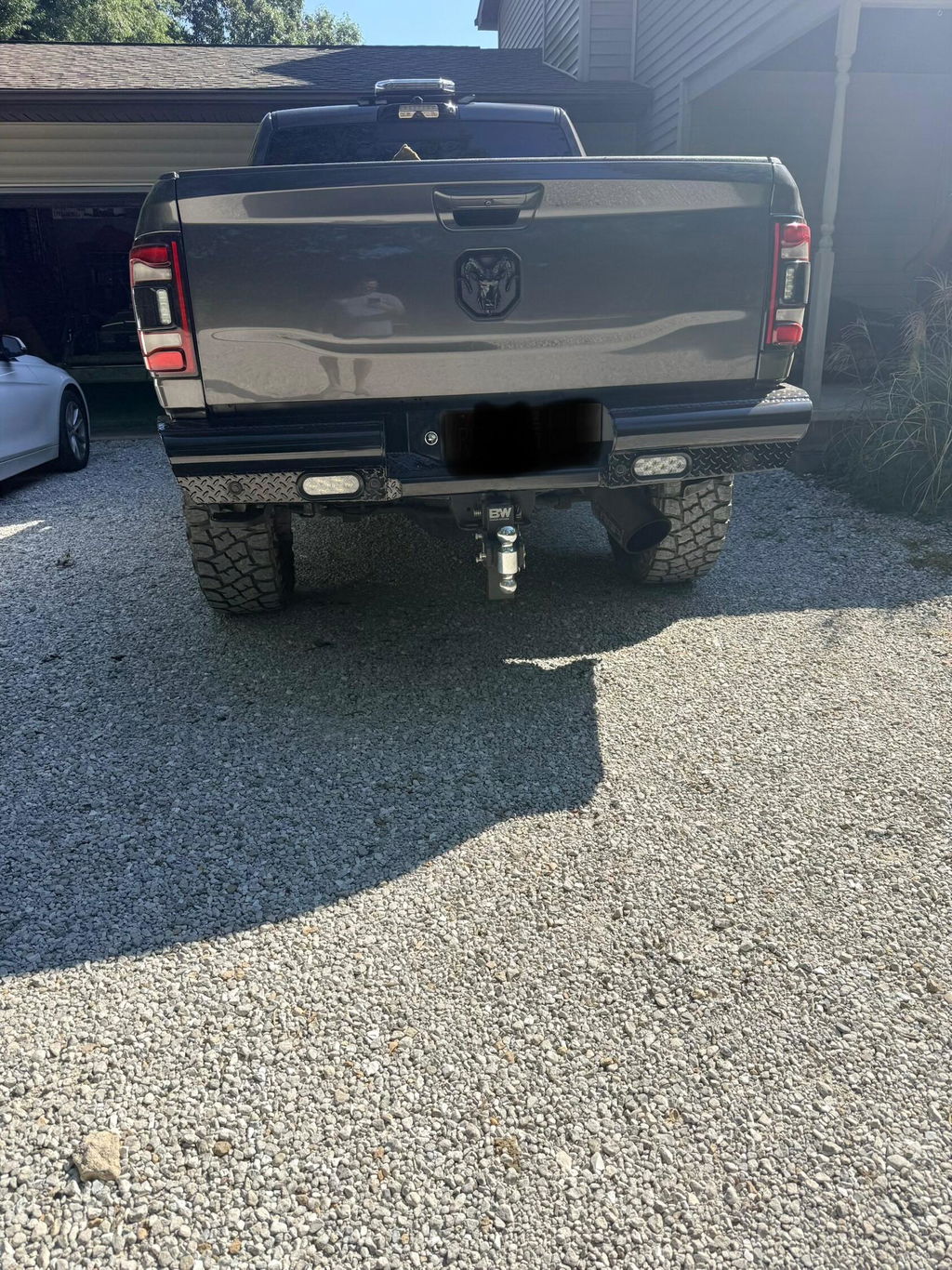
Recovery happens nose-first: you winch toward the anchor you can see. Rear winch setups exist for specialty rigs, but the front carries the mounting structure and the fairlead opening.
Set Up the Pull Before You Need It
A stuck truck is not the place to find out your ratings do not match. Run the two checks now: winch at 1.5 times your GVWR, bumper rated at or above the winch. Caught between two capacities, or unsure what your trim's sensors allow? Send us your year, trim, and the winch you are eyeing before you order, and we pull the supplier listing to confirm the pairing bolts up. Reinforce the front, spool the line, and pull with certainty.