Updated July 2026. Part weights come from Fab Fours manufacturer data; pricing reflects our live listings.
Search "pre-runner bumper" and you get three different things: a desert race truck, a Toyota trim, and a steel hoop over the grille. The last one is what the aftermarket actually sells, and the gap between the three is why buyers order the wrong configuration. We stock pre-runner steel from five brands, Fab Fours Vengeance fronts among them, and the guard question lands in our inbox every business day.
This guide settles it: where the name came from, what the guard covers, what it costs you in weight, and the three situations where you should skip it.
The Short Answer
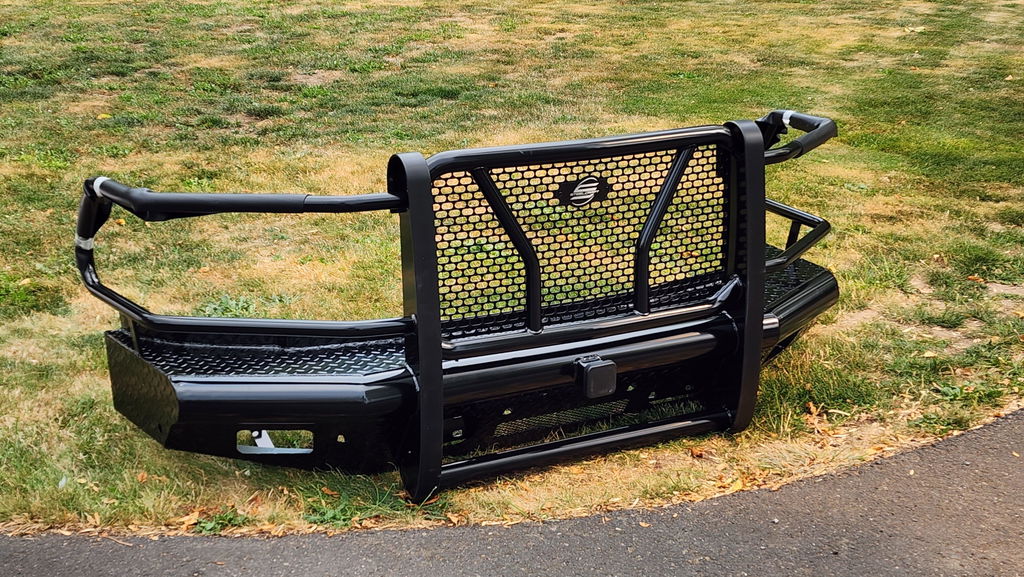
A pre-runner bumper is a full replacement steel front with a single center hoop rising over the grille. The hoop shields the grille and radiator from brush, rocks, and low frontal hits. It does not cover your headlights or fenders, which is the job of a full grille guard. On the Fab Fours lines we stock, that hoop adds roughly 20 to 35 lb and $120 to $280 over the identical bumper with no guard, and saves 10 to 20 lb against the full guard version.
Pick it when you want radiator protection and a clear view over the hood. Skip it when you need headlight coverage, when your truck runs adaptive cruise radar behind the grille, or when every pound on the front axle already counts.
Three Front Configurations at a Glance

Three practical differences sit behind that comparison. Forward visibility drops one step at a time: nothing in the windshield with no guard, one center bar with the pre-runner, a lattice of bars with the full guard. Light mounting works the other way, since only the guarded versions give you a bar position at hood height. And sensor risk climbs alongside coverage, because additional steel occupies the territory where the radar operates.
Numbers throughout this guide trace back to manufacturer specification files and the listings behind the parts we ship. Your year and trim still decide the part number, so check the listing itself.
Jump straight to your question:
Where the Pre-Runner Name Comes From
The term is borrowed from desert racing. Before a team runs the Baja 1000, it drives the course in a chase truck to scout silt beds, washouts, and alternate lines. That scouting run is called prerunning, and the trucks built for it are prerunners. They carry long-travel suspension, big tires, and a stripped tubular front end that survives repeated impacts without folding into the radiator.
Toyota then sold the idea to the street, and the Tacoma PreRunner arrived as a two-wheel-drive truck with the lifted stance and desert-racer looks, no transfer case attached. That model is why plenty of shoppers searching "prerunner" are looking for a Toyota trim rather than a bumper.
What the aftermarket kept from all this is the shape: a heavy steel front with a single center hoop instead of a full cage of bars. Manufacturers spell it several ways, so "pre-runner bumper," "prerunner bumper," and "pre-runner guard" all point at the same hardware. Fab Fours and Road Armor call the hoop a Pre-Runner Guard and sell it as one option among several, while Hammerhead names an entire line after it.
What the Pre-Runner Guard Actually Protects
The hoop sits directly in front of your grille, and that is the whole point. Your radiator, condenser, and cooling fan sit a few inches behind that plastic. A punctured radiator strands the truck where it happens, and the hoop puts steel across the middle of the opening where that damage usually comes from.
Three things the guard genuinely does:
- Shields the cooling stack. Brush, gravel thrown by the truck ahead, and low-speed frontal contact get intercepted before they reach the radiator.
- Adds a mounting surface at eye level. The hoop takes a light bar high enough to throw light past the hood line, which the bumper face cannot do.
- Deflects brush upward. A branch that catches the hoop rides over the hood instead of into the grille opening. The hoop is one bar wide, so this is center-of-the-truck protection, not full-width protection.
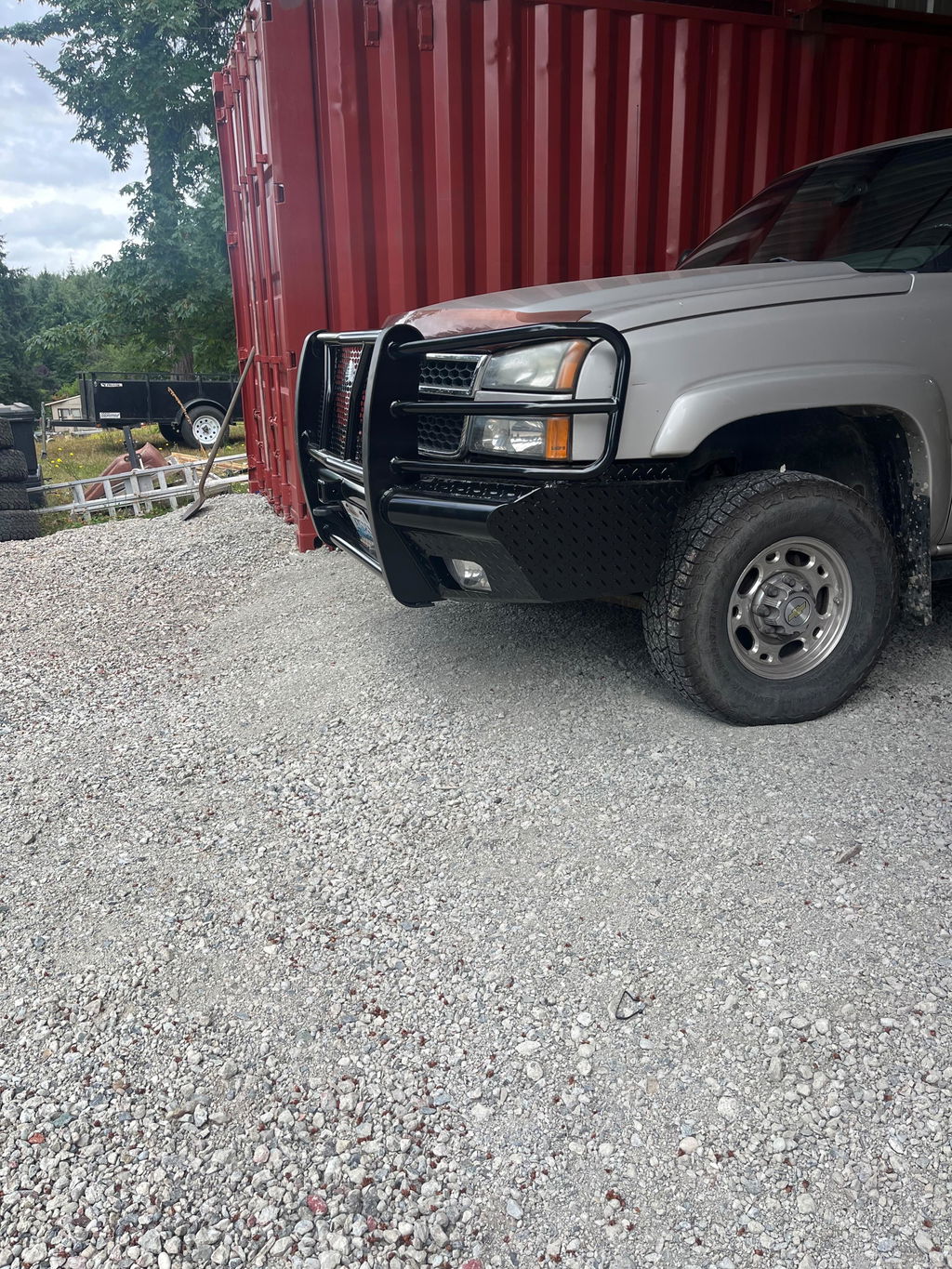
Two things it does not do. It does not protect your headlights, which sit outboard of the hoop and stay exposed, and it is not a livestock guard. If deer strikes or cattle are the actual risk, the wide-coverage answer is a full grille guard, the shape Ranch Hand and Steelcraft built their name on. Our honest read on whether a Ranch Hand front is worth it covers that direction.

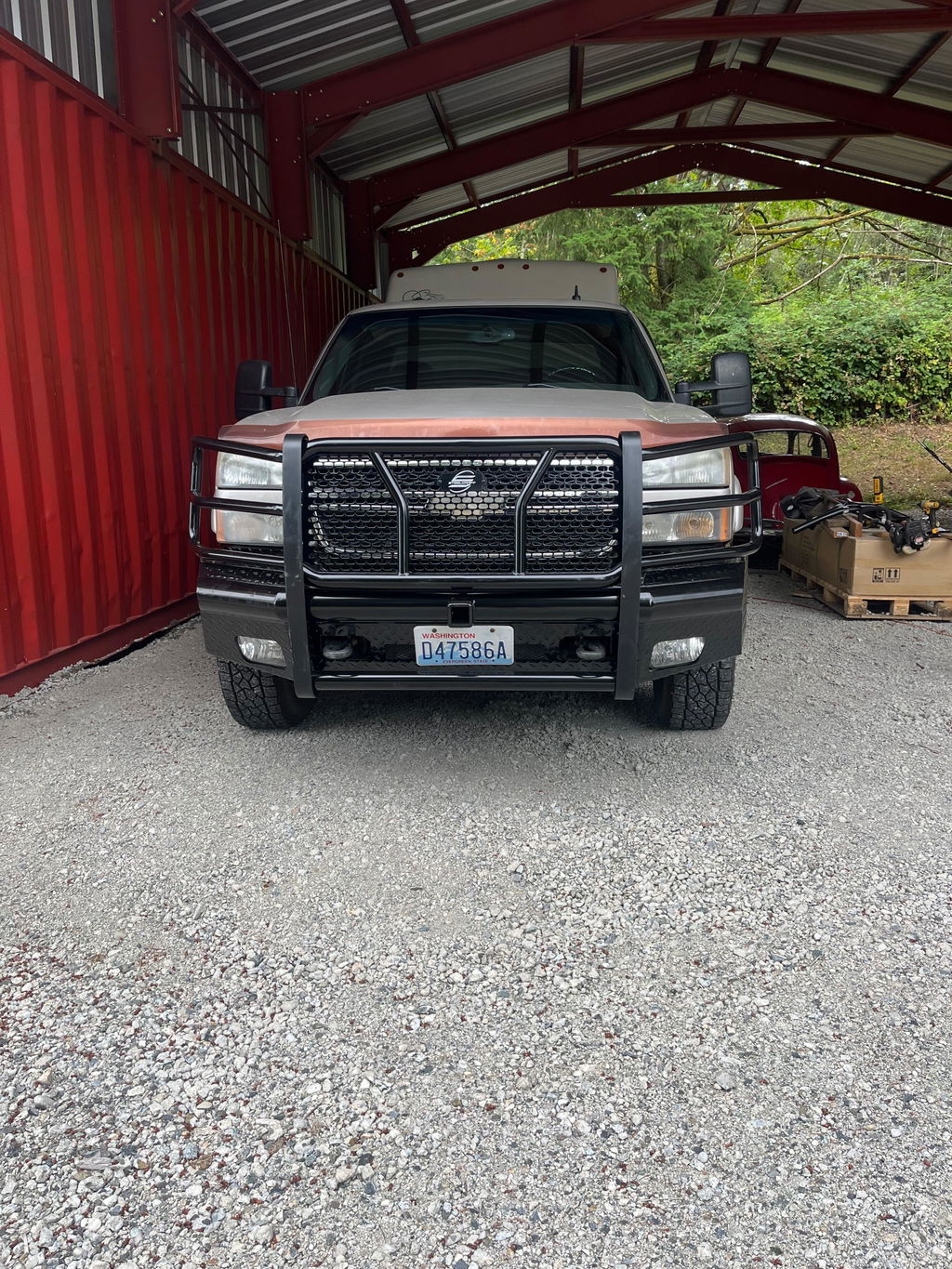
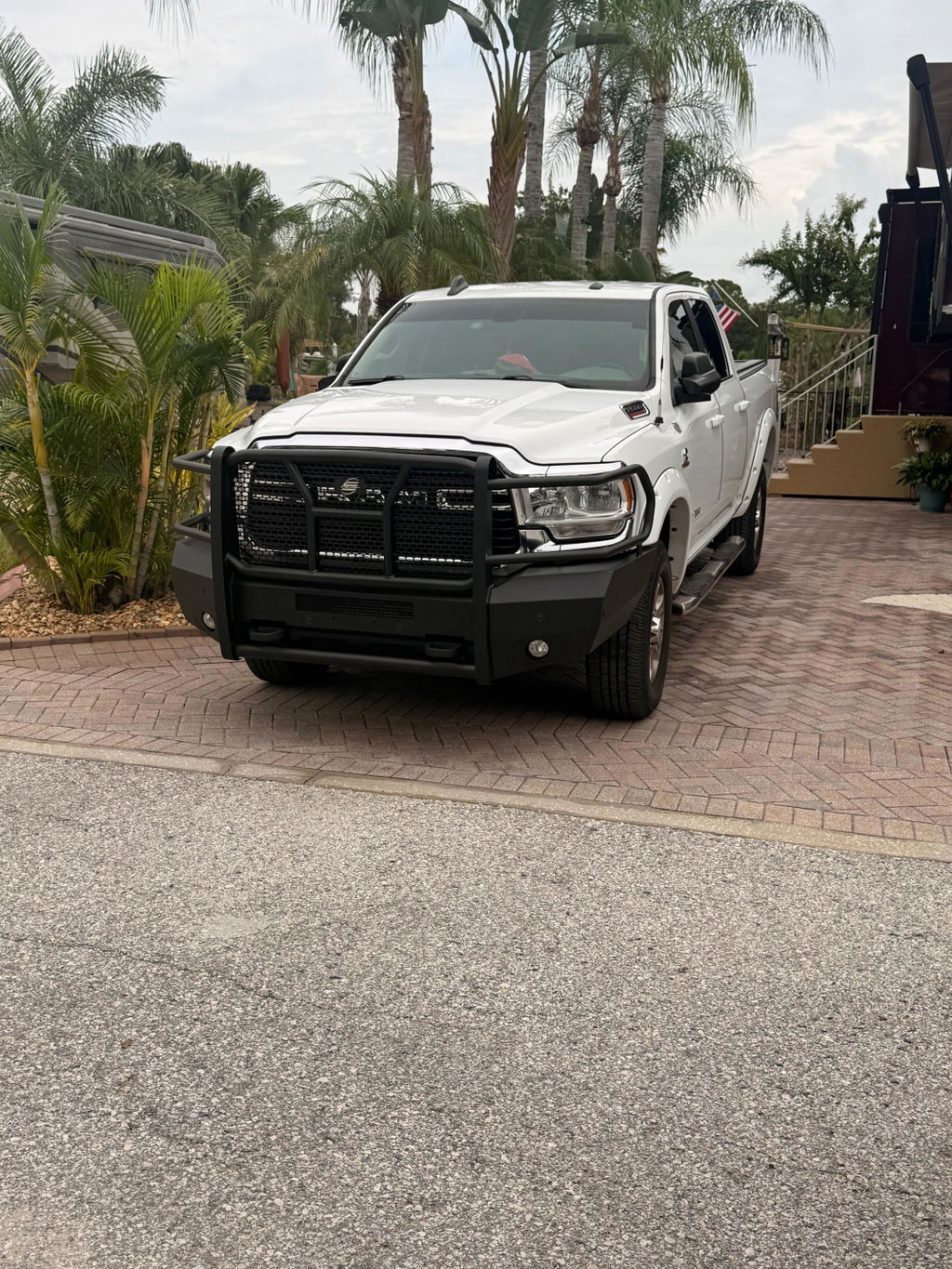
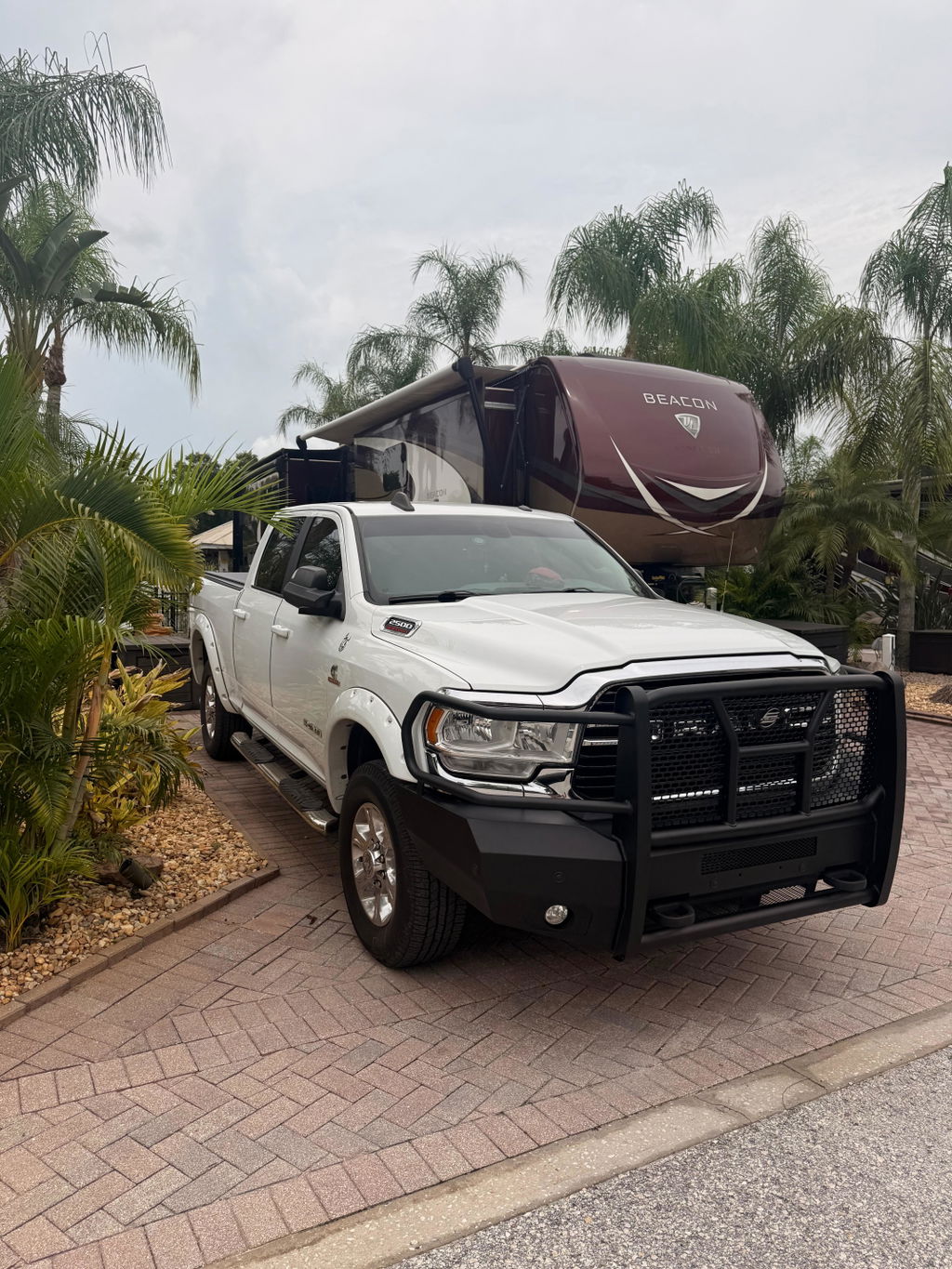
Head-on, the geometry explains itself. The hoop stands across the middle of the grille, the winch and the light pods sit in the bumper face below it, and both headlights are out in the open with nothing in front of them. A full grille guard fills those corners; the pre-runner deliberately does not.
The honest framing is coverage versus everything it costs you: weight, money, and forward view. The pre-runner guard is the middle setting, and whether the middle is right depends on which of those three you are least willing to spend.
Pre-Runner vs No Guard vs Full Guard: What the Hoop Costs
This is where the decision stops being about looks. Fab Fours sells the identical bumper in all three guard configurations, publishes a part weight for each in its manufacturer specification file, and prices each separately. Only the guard changes, which makes the comparison unusually clean.
| Truck and line | No guard | Pre-Runner guard | Full grille guard |
|---|---|---|---|
| F150 2018-2020, Vengeance | 125 lb / $2,380 | 150 lb / $2,570 | not offered |
| Sierra 1500 2016-2018, Vengeance | 125 lb / $2,380 | 150 lb / $2,570 | not offered |
| Tacoma 2016-2023, Premium winch | 220 lb / $2,120 | 240 lb / $2,240 | 250 lb / $2,260 |
| Ram 1500 2013-2018, Premium winch | 300 lb / $2,910 | 320 lb / $3,190 | 340 lb / $3,310 |
| Super Duty 2017-2022, New Premium winch | 325 lb / $2,680 | 360 lb / $2,890 | 375 lb / $3,100 |
So the hoop costs 20 to 35 lb and $120 to $280, depending on the truck. Going all the way to the full grille guard costs another 10 to 20 lb and, in these rows, another $20 to $210.
That second number is the one worth sitting with. On the Tacoma, stepping from the pre-runner guard to the full guard is $20. On the Ram 1500 it is $120. If headlight coverage is worth anything at all to you, those gaps are small enough that the pre-runner guard stops being the obvious middle choice and starts being a deliberate one. Where the Vengeance line is concerned the question does not arise, because Fab Fours does not build a full guard version of it.
One thing the part numbers settle: you choose the configuration once. The guard is welded into the bumper, so no guard, pre-runner, and full guard are three separate part numbers at three prices, and there is no hoop sold separately to bolt on next year. Nothing in our catalog is a pre-runner guard by itself.
Weight on the nose is not free, because it sits ahead of the front axle, where it works against your front springs harder than the same weight would in the bed. Half-ton and midsize trucks show it first: the front end settles, and the factory stance goes slightly nose-down. A leveling kit, meaning front spacers that restore ride height, or heavier front springs will correct it. Heavy-duty trucks are sprung for a snow plow and absorb the extra weight without complaint.
The trade also runs the other way. If you have already decided on a heavy winch front, the hoop is a small addition to a part that is already 300 lb. If you are hanging steel on a Tacoma, 20 lb matters more than the number suggests. We covered the wider version of this question in our guide to steel versus aluminum bumpers.
Winch, Lights, and Recovery Points
Most pre-runner fronts are built winch-ready, and that rated mount is a large part of what you are paying for. Hammerhead builds its pre-runner line from 7-gauge steel shells with through-frame mounting, and pairs the shell with a 1.25 inch tube guard with 0.12 inch walls, per its own product pages. Steel gauge runs backward, so a lower number means thicker plate, which puts 7-gauge near 3/16 inch. Its 2013-2018 Ram 1500 pre-runner front carries a 187 lb shipping weight, before a winch goes in.
Light mounting is the practical argument for the hoop. The bumper face accepts pods or a short bar down low, where the beam lights the road just ahead. The hoop accepts a bar at hood height, where the beam reaches much farther. Fab Fours designs the Vengeance line around a 20 inch light bar plus auxiliary LED pods. Road Armor's Stealth pre-runner fronts arrive with round or square light cutouts already in the face, so the pod shape is decided before you order.

Recovery hardware follows the same logic as any replacement front. Shackle mounts are welded into the bumper structure and tie into the frame, not into sheet metal. If you plan to add a winch later, read the bumper's stated winch rating first, then size the winch to the truck. The rule is at least 1.5 times your GVWR, the loaded-truck maximum printed on the door-jamb label.
Sensors, Radar, and Cameras
The pre-runner guard is the one configuration where verifying your electronics matters, and the reason is where the hoop sits. Adaptive cruise radar usually sits low and centered, behind the grille or inside the lower fascia, the plastic panel under the bumper line. That is exactly the space the pre-runner hoop passes through on its way up.
Parking sensors are the easy half of the question. Current pre-runner fronts arrive with the sensor cutouts, and Fab Fours builds Sensor and Non-Sensor versions within the same part number family, so you order the one that matches your truck. Read the product title and the fitment notes carefully, because the difference is functional and the two are not interchangeable.
Adaptive cruise control is the harder question, and the answer changes by manufacturer and by build. SEMA's own guidance on fitting accessories to trucks with driver-assist systems makes the point plainly: sensors are built to read through that factory plastic, and bolt-on hardware in the zone changes what they see. Some manufacturers publish the clearance dimensions around the radar window, others sell a relocation bracket that moves the radar behind the grille, and some configurations simply lose the feature.
None of that is a reason to avoid a pre-runner front. It is a reason to ask first. Tell us the year and the trim. We check the radar note on that exact build against the guard you want, so the answer lands before the freight truck does.
When to Skip the Pre-Runner Guard
Three situations where a different configuration serves you better.
You want headlight protection. The hoop leaves the corners open, so deer country, cattle guards, and heavy brush call for a full grille guard where the bars run wide and cover the lights. Buy the coverage you actually need instead of the shape you like.
Your truck's radar sits dead center. If no relocation bracket exists for your configuration, and adaptive cruise control matters to your driving, choose a no-guard replacement front. It keeps the feature and still gives you the steel, the winch mount, and the recovery points.
You are watching every pound. Midsize trucks, half-tons that tow at the top of their rating, and any truck already carrying a winch plus a light bar are all candidates for the no-guard version, so skip the hoop and spend the weight budget on the winch instead.
There is a fourth case worth naming: if the truck never leaves pavement and the goal is the look, the pre-runner front still delivers it, and no one here will tell you otherwise. Just buy it knowing that is the reason, and pick the lighter line rather than the heaviest one in the catalog.
Install Day and Freight
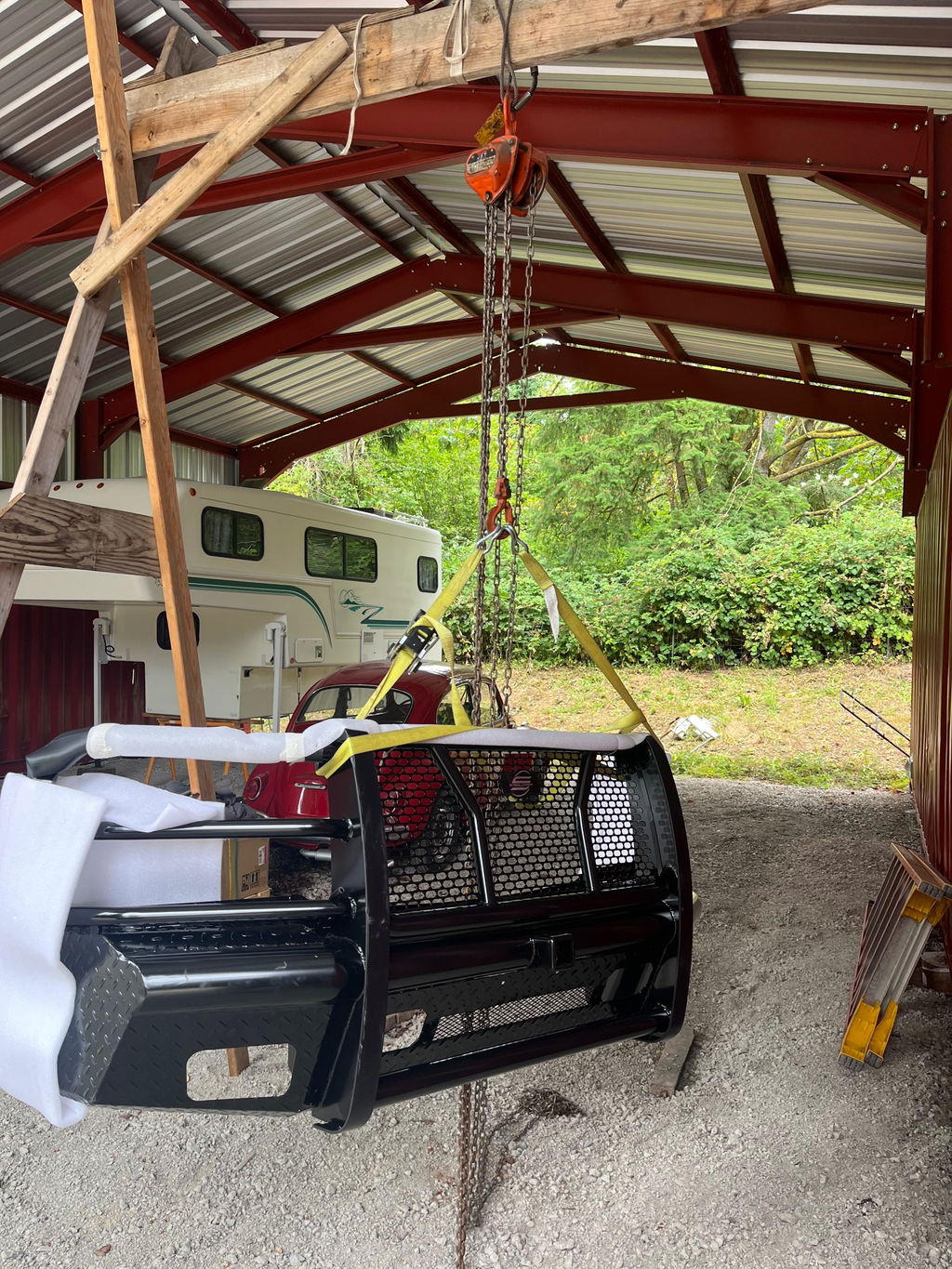
Plan install day around the weight. A pre-runner front runs roughly 150 lb on a half-ton and 350 lb or more on a heavy-duty truck, so bring a second person and a floor jack. Budget 2 to 3 hours for a bolt-on replacement front on factory frame points, longer if the original bolts have spent a decade in road salt. Wiring for lights adds an hour and wants a fused feed run away from heat.

These bumpers ship LTL freight, which means a freight carrier brings the crate on a pallet to the curb. Walk the crate before anything gets signed, and write any damage onto the paperwork while the driver waits. A damage note made at delivery is far easier to act on than one raised a day later.
Pre-Runner Lines We Stock
Five brands in our catalog build a pre-runner front, and between them the coverage runs several hundred parts deep. It is thickest on Ford, Chevy, GMC, and Ram, with Toyota coverage concentrated on Tacoma and Tundra. Pricing below is rounded, and reflects what these lines start at on our site in July 2026.
| Brand | Line | What defines it | Starts near |
|---|---|---|---|
| Fab Fours | Vengeance, Premium, Black Steel, Black Steel Elite | Pre-Runner Guard offered as one option across four series, Sensor and Non-Sensor versions | $1,730 |
| Hammerhead | Pre-Runner series | 7-gauge shell, through-frame mounting, winch and non-winch versions of most fitments | $1,830 |
| Warn | Ascent and Ascent HD | Newest fitments in the group, 2019 and later trucks, built around Warn's own winches | $2,900 |
| TrailFX | Pre-Runner front and rear | The budget entry, and the only rear pre-runner bumpers we carry | $810 |
| Road Armor | Stealth with Pre-Runner Guard | Round or square light cutouts built into the face, winch and non-winch | $2,680 |
Two lines are missing from that list on purpose. Ranch Hand and Steelcraft, the brands we ship most, do not build a pre-runner guard. Their front-end answer is the full grille guard, and if the coverage argument above pointed you that direction, our comparison of Steelcraft and Ranch Hand is the better next read.
Working from the truck instead of the brand, open your model's bumper page and filter the fronts: F150, F250/F350 Super Duty, Ram 1500, Ram 2500/3500, Silverado 1500, Silverado/Sierra HD, Tacoma, and Tundra. Not sure which generation your truck falls in, the complete truck bumper fitment guide sorts that out first.
Frequently Asked Questions
What is a pre-runner bumper?
A pre-runner bumper is a full replacement steel front bumper with a single center hoop that rises over the grille. The name comes from desert racing, where prerunner trucks scout a race course before the event. The hoop protects the grille and radiator without the wide bar coverage of a full grille guard.
What does a pre-runner guard protect?
It shields the grille, radiator, condenser, and cooling fan from brush, thrown gravel, and low frontal impacts. It does not cover the headlights or the fenders, which sit outboard of the hoop. Headlight protection requires a full grille guard.
Is a pre-runner bumper worth it?
It is worth it if you drive brush, ranch roads, or trails where the cooling stack is the exposed part, or if you want a high mounting point for a light bar. On the lines we stock, the guard adds roughly 20 to 35 lb and $120 to $280 over the same bumper without it. For pavement-only trucks, it is a styling purchase.
How much weight does a pre-runner guard add?
Between 20 and 35 lb depending on the vehicle, based on published manufacturer specifications. A Fab Fours Vengeance front for a 2018-2020 F150 weighs 125 lb with no guard and 150 lb with the pre-runner guard. The full grille guard configuration of the identical bumper typically adds another 10 to 20 lb.
Will a pre-runner guard block my parking sensors or adaptive cruise?
Parking sensors are generally fine, since current fronts include cutouts and brands like Fab Fours sell Sensor and Non-Sensor versions of the same part. Adaptive cruise is the one to verify, because its radar usually sits low and centered, right where the hoop passes. Check the fitment notes for your year and trim, or send us the details and we will confirm.
How much more does the pre-runner guard cost?
On the Fab Fours pairs we stock, $120 to $280 over the identical bumper with no guard: $190 on an F150 Vengeance front, $120 on a Tacoma Premium, $280 on a Ram 1500 Premium. Stepping up again to the full grille guard, where the line offers one, adds another $20 to $210. The guard is welded in, so the configuration is chosen at purchase and cannot be added later.
Does a pre-runner guard block airflow to the radiator?
Not in any meaningful way. The hoop is a single tube standing in front of the grille, roughly 1.25 inches across on the Hammerhead line, so it shades a narrow strip rather than covering the opening. Cooling is designed around the bumper itself, not the guard: Fab Fours lists a lower cutout for intercooler airflow as a feature of the Vengeance front, guard or no guard. A full grille guard puts far more material in the airstream than a pre-runner hoop does.
What is the difference between a pre-runner bumper and a bull bar?
A pre-runner bumper replaces the factory bumper entirely and carries its own frame mounts, winch provision, and recovery points. A bull bar bolts on in front of the factory bumper, which stays on the truck. The replacement front is stronger and heavier; the bull bar is cheaper and easier to reverse.
Can you mount a winch on a pre-runner bumper?
Most of them are built for it. Hammerhead, Fab Fours Premium, Warn Ascent, and Road Armor Stealth all offer winch versions with a rated mount tied into the frame. Check the bumper's stated winch rating, then size the winch to at least 1.5 times your truck's GVWR from the door-jamb label.
Are pre-runner bumpers street legal?
A replacement front bumper is legal in most states provided it keeps the bumper within the required height range, does not obscure mandatory lighting, and leaves the license plate visible and properly mounted. Requirements vary by state, so check your local vehicle equipment code before you build.
Pick the Coverage, Not the Look
The pre-runner guard is a specific tool: radiator protection and a high light mount, without the weight and the visual clutter of a full cage. That is a good answer for a lot of trucks and the wrong answer for a few, so match it to what actually threatens your front end, then check your sensors before you order.
Caught between the pre-runner and the full guard, or unsure what your trim's radar allows? Message us with the year, the trim, and the roads the truck actually sees. We read the fitment data behind the part and tell you which guard clears your build. Reinforce the front, and drive it like you mean it.