Updated July 2026. Fitment data verified against supplier listings.
A bumper fits your truck when it matches your generation, your body and frame, and the electronics your trim carries. The model name alone is not enough, and the model year alone is not enough. Get those three things right and the bumper bolts on. This guide shows you how to read your own truck in a few minutes, then points you straight to the year-by-year guide for your exact model.
Skip ahead to what you need:
The 4 Questions That Decide Bumper Fitment

Every fitment call on every truck comes down to four questions. Answer them about your own truck and you will know what to shop for before you ever open a product page.
A quick note on two words you will meet below. A platform code, like GMT800, K2XX, P558, or DT, is the factory's engineering name for one body-and-frame design. You never have to say it out loud to buy a bumper, but it is the shorthand parts catalogs use to group what bolts together. CANBUS is the wiring brain your truck uses to pass signals between its modules. It only comes into play once you add lights or a winch, where the wrong wiring will throw a dashboard warning.
1. Will a bumper from a different year fit my truck? Only within the same generation. A generation is one body-and-frame design that a maker runs for several model years, and a bumper bolts to that design, not to the calendar year. Two trucks badged the same year can belong to different generations. Find your generation first, in Step 1.
2. Does my trim change which bumper fits? The base mounting is usually the same across trims, but two things move it. The electronics your trim carries (parking sensors, backup camera, adaptive cruise) and the special trims that wear their own front end, like Raptor, TRX, ZR2, and TRD Pro. Check your trim in Step 2.
3. Will an aftermarket bumper keep my sensors and camera? Many are built to retain them with molded cutouts, and some are not. A federal rule put a backup camera on every light truck built from May 1, 2018 forward, so most newer trucks have one to protect. Match the listing to your truck's tech in Step 2.
4. Are front and rear bumpers interchangeable? No. They mount to different points on the frame and never cross over. Front is also where the demand and the widest selection sit. Settle front or rear up front, in Step 3.
Step 1: Pin Down Your Exact Truck
Fitment starts with knowing which truck you actually have, and that takes about a minute. Here is where to look.

| Where to look | What it tells you |
|---|---|
| Driver door-jamb sticker | Your model year and build date |
| 10th character of your VIN | Your model year (decode the rest free with the NHTSA VIN decoder) |
| Tailgate badge, grille, and headlights | Which generation you have when two share a model year |
Start with the year, but do not stop there. Now map that year to a generation. This is the step most people skip, and it is the one that decides everything. Makers do not redesign a truck on a clean calendar line, so a single model year can sit on either side of a redesign. The classic trap: a truck sold in one model year under the same name can be the old body and the new body at the same time, built in parallel and badged identically. The only way to tell them apart is the truck itself, not the title.
Read the badge and the front end. The grille shape, the headlight cluster, the tailgate stamp, and the trim badge are what separate a carryover year from a redesign year. When the year-by-year guide for your model flags a split, it tells you the exact visual cue to look for. That is your confirmation.
Once you know your generation, the rest is straightforward. Find your truck below and open its guide for the year ranges that share a bumper.
Step 2: Does Your Trim or Electronics Change Anything?
Within one generation, most trims take the same bumper. Two things can change that, and both are quick to check.
| On your truck | Where to find it | Does it change the bumper? |
|---|---|---|
| Parking sensors | Round pucks in the bumper | Yes. The bumper needs the sensor pockets |
| Backup camera | Small lens in the grille or tailgate | Yes. Required by law on 2018 and newer trucks (FMVSS 111) |
| Adaptive cruise | Radar behind the grille, switch on the dash | Yes. The front bumper has to clear the radar |
| Special trim (Raptor, TRX, ZR2, TRD Pro) | The trim badge | Yes. These wear their own front end |
Loaded trims like Lariat, High Country, Denali, and Platinum carry more of this hardware than work trucks do. Good aftermarket bumpers are built to keep your sensors, camera, and cruise working, and the listing states what it retains. Match it to what your truck actually has, and you keep every feature you drive with today.
Step 3: Front or Rear, Bolt-On or Weld
Two last calls before you shop, and both are quick.

Front or rear. These are not interchangeable, full stop. They bolt to different points and are engineered for different jobs. Front bumpers carry the winches, the grille guards, and the lighting, which is why they draw most of the demand and offer by far the widest selection. Rear bumpers are a smaller, more focused set. Decide which end you are building before you start, since the two shop completely separately.
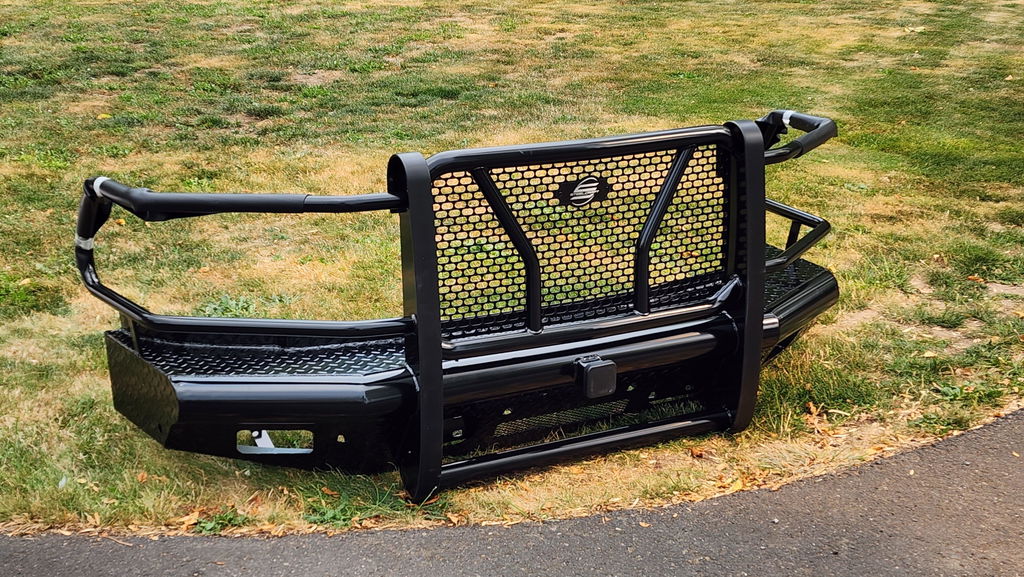
Bolt-on or weld. The good news is that most aftermarket truck bumpers are direct bolt-on. They mount to the factory frame points your old bumper used, with the supplied brackets and hardware, no cutting and no welding. A smaller group of fabricated and prerunner-style bumpers can ask for trimming or welding, and the listing says so when they do. If you want a weekend install in your own driveway, filter for bolt-on and you will have plenty to choose from.
Before You Commit: Install, Shipping, and Getting It Right
Once you know what fits, here is what to expect, so there are no surprises on the day it lands.

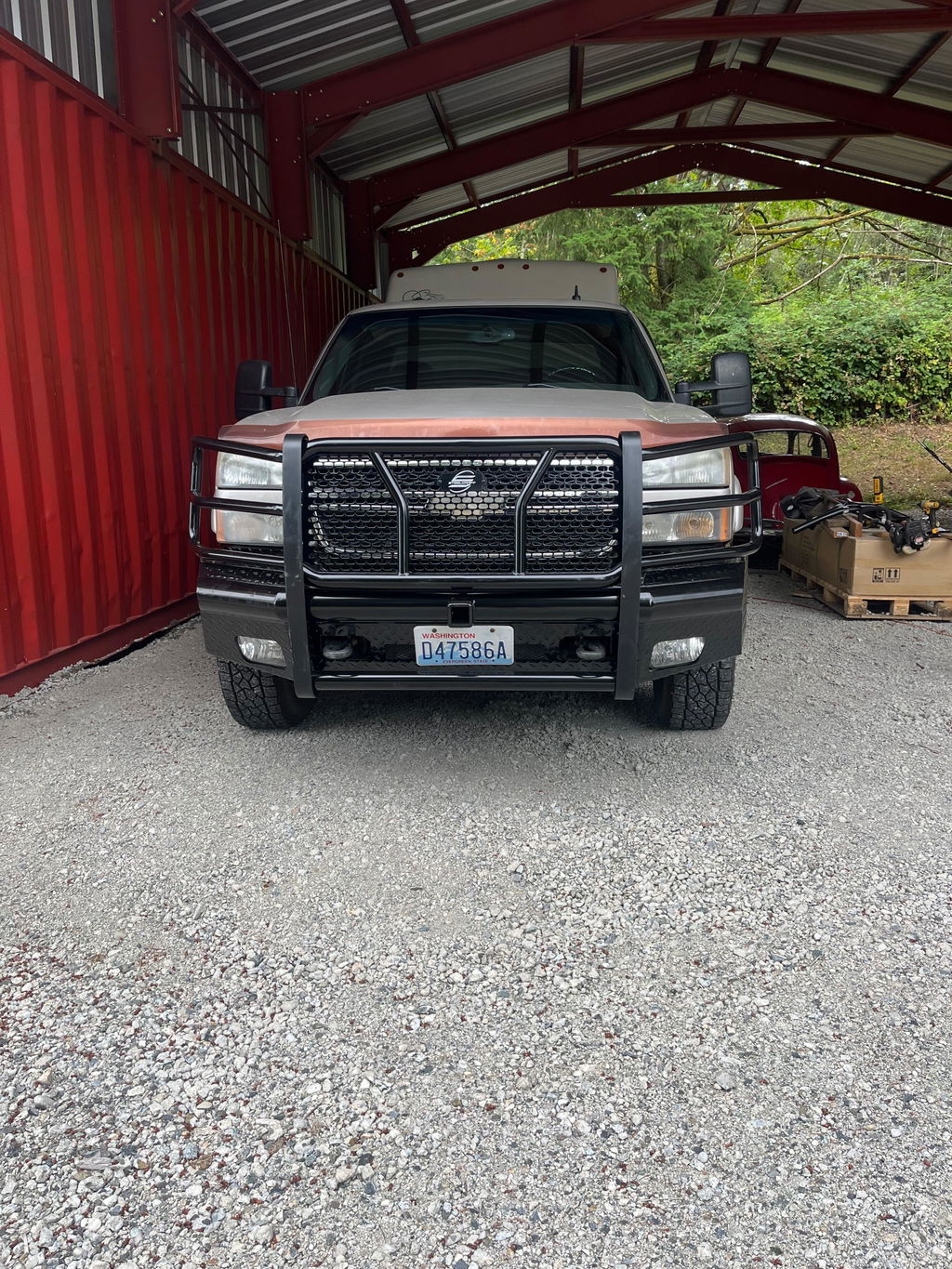
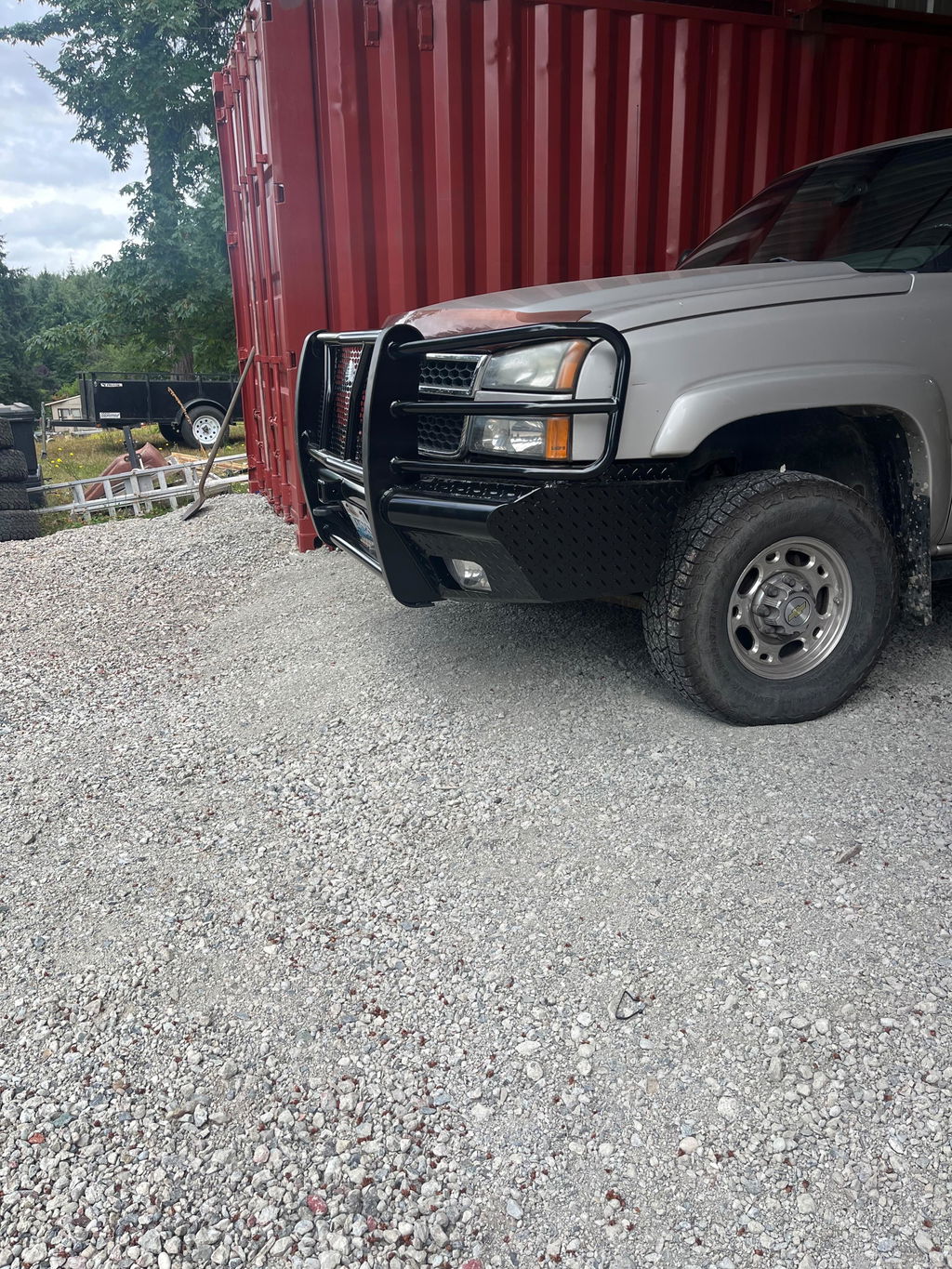
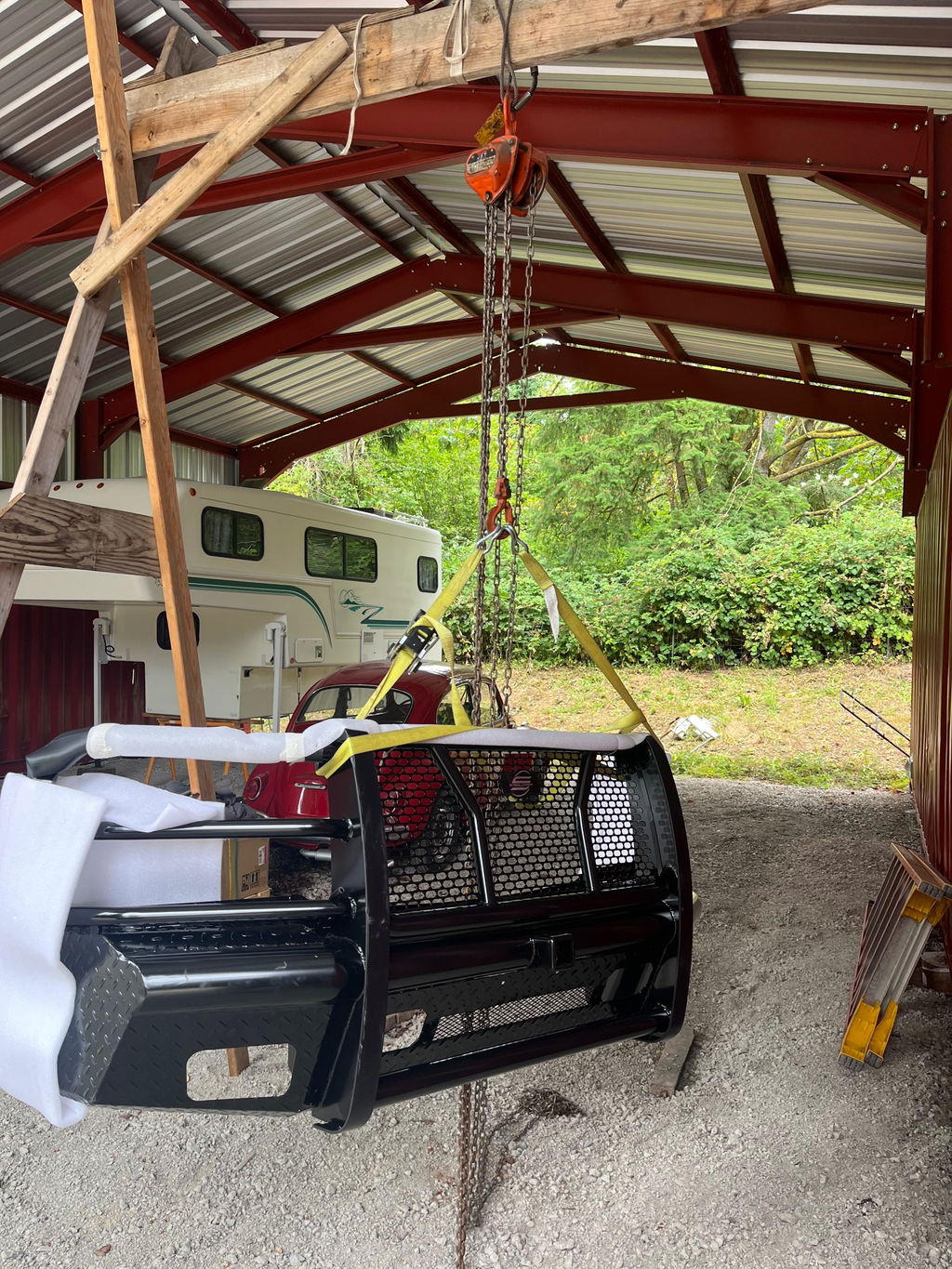
Installing it. A direct bolt-on front bumper is a manageable job with hand tools and an afternoon. The brackets and hardware come in the box, and the steps are the reverse of pulling your factory bumper. The one thing to plan for is the weight. A steel front can run from around a hundred pounds on a light-duty truck to several hundred on a heavy-duty rig, so line up a second set of hands or a floor jack to hold it while you start the bolts. If your build adds lights or a winch, that is where the CANBUS wiring kit comes in, and it plugs in without cutting into your harness.
How it ships. Heavy steel travels by freight, and shipping is free, sitewide, with no order minimum. Your bumper arrives on a pallet to your curb. Give it a quick once-over when it lands, the same as you would any large delivery, and you are set to install.
Getting it right the first time. The surest way to skip any guesswork is to have us check before you buy. Tell us your year, trim, and VIN, and we will match it against the supplier listing and confirm what bolts up, all before you spend a dollar. We field these questions every business day, from owners of every truck on this page. Running the check costs you nothing, and there is no obligation to order afterward. That is how you order once and bolt it on once.
Find Your Truck
Each guide below walks every generation of that truck: the year ranges that share a bumper, the cutoff years to watch, and the sensor and camera notes for each era. Find your truck and open its guide.
| Make | Truck | Years | Fitment guide | Shop bumpers |
|---|---|---|---|---|
| Ford | F150 | 1992-2026 | F150 fitment guide | F150 |
| Ford | Super Duty F250-F550 | 1999-2026 | Super Duty fitment guide | F250/F350 |
| Ram | 1500 (Classic vs new body) | 1994-2026 | Ram 1500 fitment guide | Ram 1500 |
| Ram | 2500/3500 (and 4500/5500) | 1994-2026 | Ram 2500/3500 fitment guide | Ram 2500/3500 |
| Chevy | Silverado 1500 (2007 overlap) | 1988-2026 | Silverado 1500 fitment guide | Silverado 1500 |
| Chevy | Silverado HD 2500/3500 | 1999-2026 | Silverado HD + Sierra HD guide | Silverado HD |
| GMC | Sierra 1500 | 1988-2026 | Sierra 1500 fitment guide | Sierra 1500 |
| GMC | Sierra HD 2500/3500 | 1999-2026 | Silverado HD + Sierra HD guide | Sierra HD |
| Toyota | Tacoma | 1995-2026 | Tacoma fitment guide | Tacoma |
| Toyota | Tundra | 2000-2026 | Tundra fitment guide | Tundra |
Don't see your truck? We carry bumpers well beyond the guides above. Start at your make and we will help from there: Ford, Ram, Chevy, GMC, Toyota, and Nissan. Midsize trucks like the Ford Ranger, Chevy Colorado, and GMC Canyon have their own collections, and Raptor and TRX fitment is covered inside the F150 and Ram 1500 guides.
We carry a wide bench of bumper brands, not a single label. Nothing here is steered toward one maker. The goal is the bumper that fits your truck and your build, whoever makes it.
Common Fitment Mistakes (Any Truck)
These are the slips that send the wrong bumper to the wrong driveway. All of them are avoidable in the planning stage.
| Mistake | How to avoid it |
|---|---|
| Shopping by model year alone | Match the year to a generation. A bumper bolts to the body and frame, not the calendar |
| Assuming every trim takes the same bumper | Check sensors, camera, cruise, and special trims first |
| Overlooking the camera on a newer truck | Anything from May 2018 on has a camera. Plan the cutout in, not out |
| Treating front and rear as interchangeable | They are built separately and never cross. Confirm which end you are buying |
| Misreading a carryover year | When old and new bodies share a year, the badge and grille tell you which one you have |
| Assuming a bumper needs welding | Most are direct bolt-on with the brackets in the box. The listing flags the few that need more |
Frequently Asked Questions
How do I know which generation my truck is?
Start with the model year from the door-jamb sticker or the tenth character of your VIN, then match it to a generation. Each model guide on this page lays out the generations by year range, including any year where the old and new body overlap. If two bodies share your year, the grille, headlights, and tailgate badge tell you which one you have.
Will a bumper from a different year fit my truck?
Within the same generation, usually yes. Across a generation change, usually no. A bumper bolts to one body-and-frame design, so a part from a year inside your generation tends to fit, while a part from before or after a redesign does not. The model guide gives you the exact year ranges that share a bumper.
Does my trim affect which bumper fits?
It can. The base mount is often shared across trims, but the electronics are not. Parking sensors, a backup camera, and adaptive cruise vary by trim and the bumper has to match them. Performance trims like Raptor, TRX, ZR2, and TRD Pro use their own front end entirely.
Will an aftermarket bumper keep my parking sensors and backup camera?
Many are built to, with molded sensor pockets and a camera cutout, and the listing states what it retains. Because backup cameras have been federally required since May 1, 2018, any rear bumper for a 2018 or newer truck should keep yours. Match the listing to the hardware your truck actually has.
Are front and rear bumpers interchangeable?
No. They mount to different frame points and are built for different jobs, so they never cross over. Decide which end you are building, since front and rear shop separately.
What is a platform code, and do I need to know it?
A platform code is the maker's engineering name for one body-and-frame design, like GMT800 or P558. You do not need it to buy, but it is how parts catalogs group what fits together, so knowing yours makes shopping faster. Each model guide ties the codes to plain year ranges.
Can I install a steel bumper myself?
For a direct bolt-on, yes. It is a hand-tool job that reverses the steps of removing your factory bumper, with the brackets and hardware in the box. The main thing to plan for is the weight, so have a second person or a floor jack ready to hold it while you start the bolts.
How does a heavy steel bumper get shipped to me?
By freight, on a pallet, to your curb, with free shipping sitewide and no order minimum. Give it a quick inspection when it arrives, the same as any large delivery, and it is ready to install.
What if I'm not sure a bumper will fit my truck?
Have us check before you buy. Send your year, trim, and VIN, and we will confirm the right bumper from the supplier data before you order. We answer these every business day, with no obligation to order afterward.
Find the Bumper That Fits Your Truck
Knowing your generation, your trim's electronics, and your end of the truck is the whole game. Get those right and the bumper bolts on the first time.
Find your truck above and open its year-by-year guide. Still weighing two years or two trims? Tell us your year, trim, and VIN, and we will confirm what fits before you spend a dollar. Order once, bolt it on once, and get back to driving.